

Wear of tunnel fan impellers and treatment methods
Wear of the impeller:
When the fan impeller rotates, it carries a small amount of large particles and numerous microscopic dust particles along with high-temperature, high-speed flue gas through the induced draft fan, subjecting the blades to continuous erosion. Over time, this results in blade edge wear at the outlet. Due to its irregular nature, this wear causes imbalance in the impeller. Additionally, the impeller surface is highly susceptible to oxidation at elevated temperatures, forming a thick oxide layer. The adhesion between this oxide layer and the impeller surface is uneven; some oxide layers can detach spontaneously under vibration or centrifugal force, which also contributes to impeller imbalance.
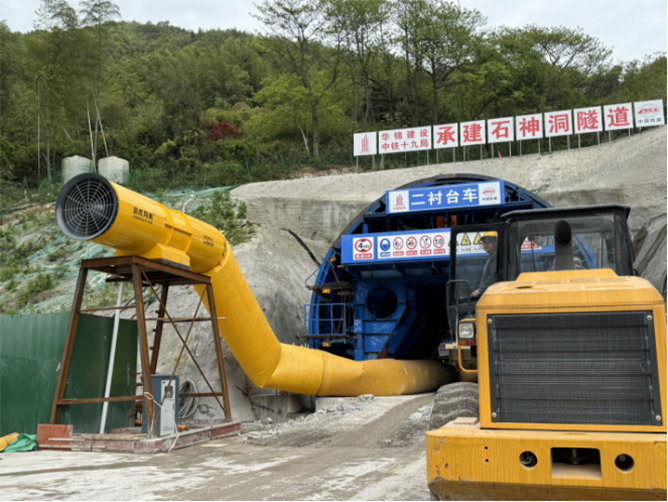
Structure of the impeller:
The smoke gas within the tunnel during construction exhibits high humidity. Although the remaining dust particles are extremely small, they possess high viscosity. As these particles pass through the induced draft fan, they are adsorbed onto the non-working surfaces of the blades under the influence of gas vortices, forming significant dust deposits particularly at the inlet and outlet of these surfaces, which gradually thicken. When some of this dust deposit detaches due to combined centrifugal force and vibration, the balance of the impeller is disrupted, causing overall vibration in the entire induced draft fan.
Measures to address impeller imbalance:
In addition to improving the ventilation efficiency of the fan, an effective method for addressing impeller wear is to enhance its resistance to wear.
Currently, the most established approach in this field involves precision casting and pressing of the impeller, incorporating wear-resistant metal elements, followed by thermal spraying technology. This process uses specialized methods to transform wear-resistant and high-temperature resistant metals or ceramics into high-speed particle streams, which are then sprayed onto the impeller blades, forming a protective layer that exhibits significantly superior wear resistance, heat resistance, and oxidation resistance compared to the impeller material itself. This not only mitigates wear-induced disturbances to the impeller’s dynamic balance but also reduces imbalance issues caused by oxide layer formation.