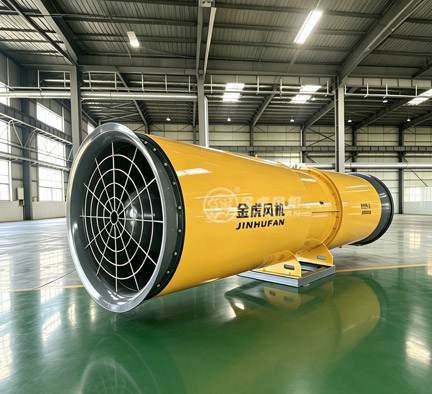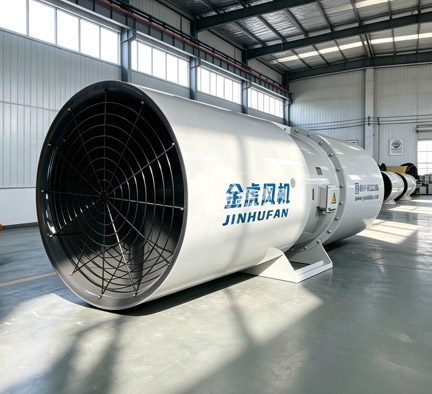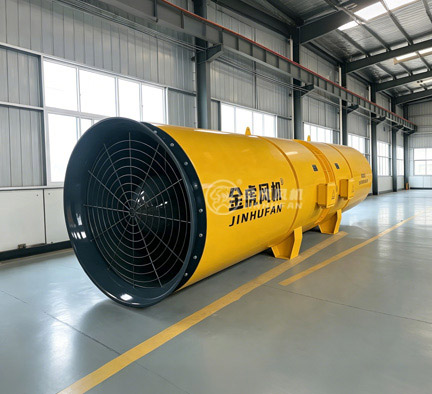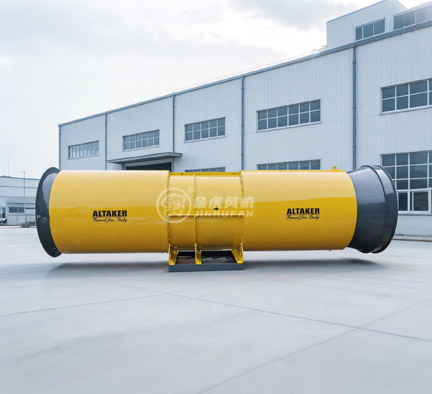
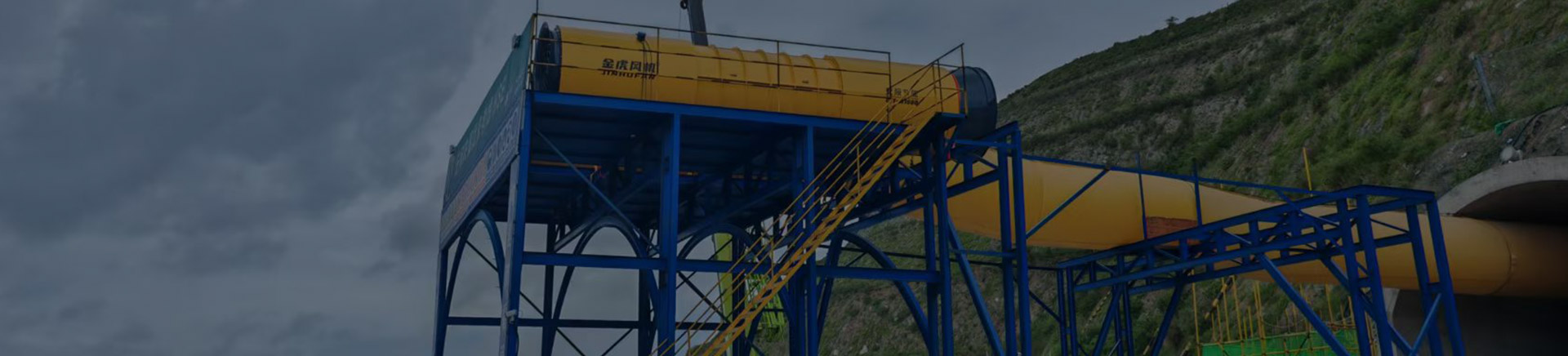
SDS Series Tunnel Jet Fans
The tunnel jet fans produced by the company are available in either unidirectional (K) or reversible bidirectional (R) configurations. For reversible bidirectional jet fans, the forward flow rate and thrust are essentially equal to those in the reverse direction.
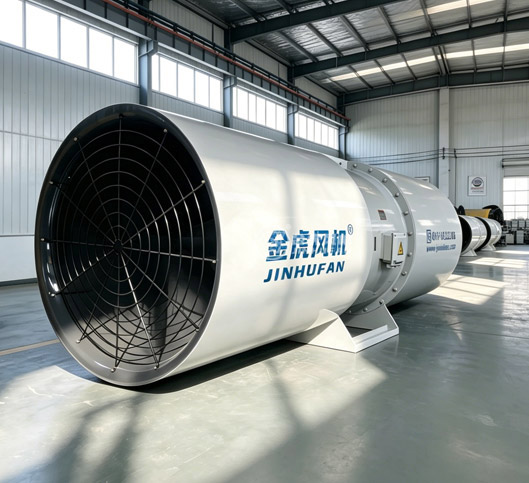
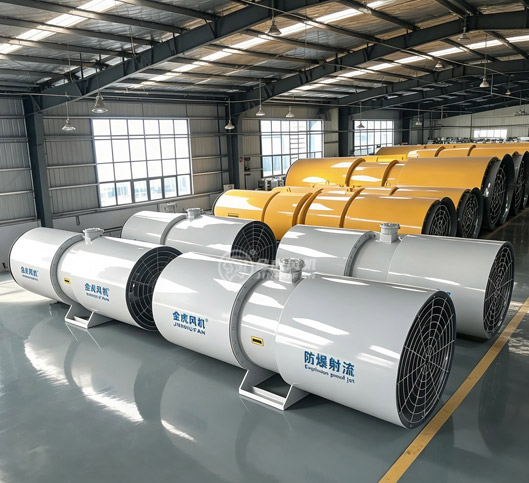
Working Principle of Jet Fans
-
The jet fan is suspended at the top of the tunnel, utilizing the tunnel itself as a duct.
-
Specifically designed to generate maximum jet power with a given power consumption, it operates on the principle of impact-driven transmission: during operation, a portion of the total tunnel airflow is drawn in by the fan and then expelled at high velocity from the outlet. The change in thrust force between the ejected airflow and the remaining air transfers energy to the latter, pushing the air within the tunnel toward the outlet while drawing in fresh air at the inlet.
-
Carbon monoxide concentration and turbid air levels increase progressively from the inlet point until reaching their design target values at the outlet.
- The fan is installed within the tunnel's cross-section without occupying traffic space or requiring specialized ventilation facilities, offering convenient installation and low civil construction costs.
Performance Testing of Jet Fans
The company strictly tests and inspects the products in accordance with China's fire protection product standards GA 211-2009 and CCCF-CPRZ-19:2019, ensuring operational performance at high temperatures up to 280°C for one hour. Test results for thrust, flow rate, and noise levels were obtained under various specifications, different blade angles, and both forward and reverse operating conditions.