

Various Methods for Fan Noise Measurement and Existing Solutions
There are numerous causes of noise generated by fans, and only by identifying the root cause can effective solutions be implemented. A fan is essentially a positive displacement compressor consisting of a pair of vertically meshed elliptical blades that rotate at high speeds to convey gas. During operation, primary noise sources include aerodynamic noise (i.e., airflow noise), transmission gear noise, motor noise, and pressure regulation valve noise. Among these, aerodynamic noise stands out as the most significant component. It comprises two distinct parts: periodic exhaust noise resulting from pressure pulsations during blade rotation, and vortex noise generated when gas flows split along the blade surfaces. The intensity of exhaust noise depends on factors such as blade rotational speed, exhaust flow rate, and static pressure, typically exhibiting a low-to-medium frequency spectrum with distinct peaks. In contrast, vortex noise arises from the blade geometry, gas velocity relative to the casing, and flow dynamics, generally producing continuous high-frequency noise patterns.
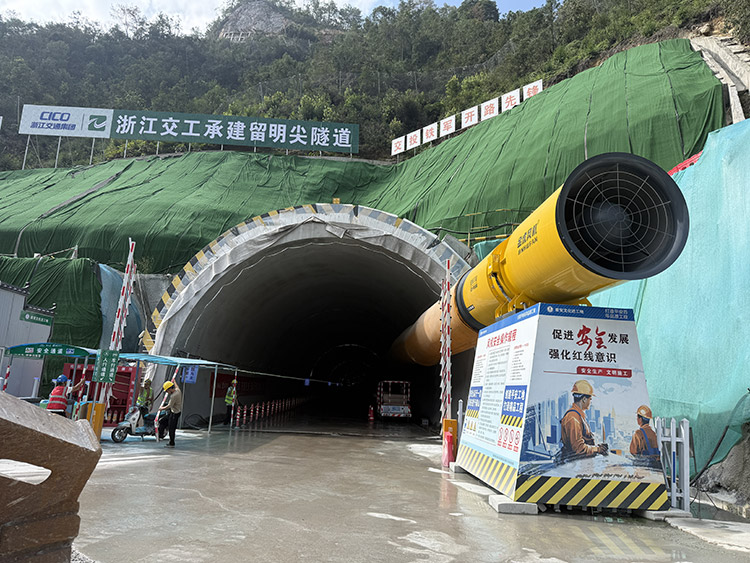
Under specific operating conditions, noise is emitted from various sources including the fan’s intake and exhaust ports, casing, and pipelines. In practical applications, the exhaust port is typically sealed by connecting it to a gas delivery pipeline. Consequently, noise from the intake port becomes particularly intense and causes significant environmental disturbance. Measurement data indicate that the noise level at the fan’s air outlet reaches approximately 105–135 decibels in “A” mode and 110–140 decibels in “C” mode.
Wind turbines generate not only highly intense noise but also complex, continuous frequency components. To quantitatively characterize the distribution of noise energy across the entire audio frequency range, octave-band filters are commonly employed in noise measurement for spectral analysis across eight frequency bands spanning from 63 Hz to 800 Hz, thereby obtaining the noise spectrum characteristics curve of the sound source—that is, the relationship between octave-band sound pressure levels and frequency.
The characteristics of its noise spectrum curve are as follows:
The noise spectrum is broad, meaning high noise levels are present across a wide frequency range, with low-to-medium frequency noise being the predominant component. At low static pressure (i.e., under light load conditions), the peak frequency typically occurs at around 125 Hz in the low-frequency range; when operating at rated static pressure, a new noise peak appears at approximately 500 Hz in the mid-frequency range. This indicates that increased fan operating pressure leads to a significant increase in mid-to-high frequency noise levels.
The noise level and spectral characteristics of a fan are not only determined by its static pressure during operation but also significantly influenced by flow rate and rotational speed. For instance, noise levels increase proportionally with higher flow rates; when the rotational speed doubles, fan noise can rise by approximately 5–10 dB, particularly noticeable in mid-to-high frequency components. Mitigation measures for fan noise are essential.
When reducing fan noise, in addition to considering the noise at the air intake, the solid-body sound transmission from the fan’s body noise and vibration should also be taken into account based on site conditions.
Axial flow fans generate significant noise during operation, and this noise level increases with rising air volume and pressure. The following methods are commonly employed to mitigate fan noise issues:
1) Noise from the casing and motor can be mitigated by installing soundproof enclosures, placing the fan in a dedicated acoustic isolation chamber, and applying sound absorption and insulation treatments within the chamber.
2) Install a silencer with built-in acoustic baffles outside the fan outlet to reduce noise during passage through the specially designed silencer. The silencer serves as an effective measure for mitigating noise radiation or transmission along pipelines at the intake and exhaust ports of aerodynamic equipment.
3) For exterior louvers on the ground floor, acoustic louvers should be used whenever possible.
4) The fan is suspended using a damping spring suspension mount with vibration dampers.